
The Role of Precision Testing in Modern Electronics Manufacturing
- Noida, India
- 56 minutes ago
- Ad Views: 3
- ID: 1146
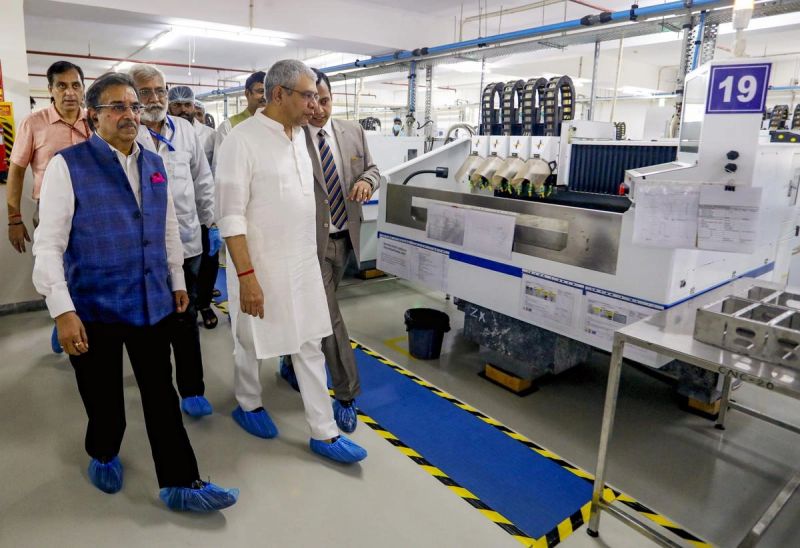
As electronic devices become more sophisticated, manufacturing quality depends on more than efficient assembly. Each stage of production must support consistent performance, dependable functionality, and reliable product quality. Testing and validation therefore play a central role in modern electronics manufacturing, helping manufacturers identify production issues before products reach customers.
For companies operating in competitive technology markets, a structured approach to testing can strengthen manufacturing processes while supporting continuous improvement. Optiemus participates in India’s evolving electronics ecosystem with capabilities across manufacturing and technology-related operations, making quality-focused production an important part of its broader industry role.
Electronic products contain multiple components and interconnected systems that must operate together correctly. A minor manufacturing variation can affect device performance, durability, appearance, or user experience. Testing provides manufacturers with a systematic way to identify such issues during production.
Testing can be incorporated at different points in the manufacturing process. Incoming components may be checked before assembly, while assembled products can undergo functional and performance verification. Final inspection can also examine physical appearance, finishing, assembly consistency, and other defined quality parameters.
This layered approach allows manufacturers to detect problems earlier instead of relying exclusively on final inspection. Early detection can reduce rework, improve production efficiency, and provide useful information for process improvement.
Validation is closely connected to testing but focuses more broadly on confirming that manufacturing processes and products meet established requirements. A well-structured manufacturing environment can use validation activities to evaluate assembly procedures, component integration, equipment performance, and production consistency.
For mobile and consumer electronics, validation may involve checking functions such as display operation, connectivity, charging, controls, physical assembly, and other product-specific characteristics. The exact testing requirements depend on the product design, manufacturing process, and applicable quality specifications.
Process validation can also help manufacturers understand whether production methods remain consistent as output changes. This becomes increasingly important when manufacturers manage different products, configurations, components, or production requirements.
Companies involved in contract manufacturing smartphones India can benefit from disciplined testing practices because multiple production stages must work together to achieve consistent results. Clear testing procedures also make it easier to identify where corrective action may be required.
Quality control and manufacturing efficiency are closely connected. Defects discovered late in production can require additional labor, materials, inspection, and rework. Identifying issues earlier can help reduce unnecessary production activity and improve resource utilization.
Testing data can provide valuable information about recurring production problems. If a particular issue appears repeatedly, manufacturing teams can investigate potential causes involving components, equipment, assembly methods, or process conditions.
This creates a feedback loop between production and quality management. Instead of treating inspection as the final step, manufacturers can use testing results to improve processes continuously.
For a mobile phone manufacturing company India, this approach can be especially relevant because mobile devices involve numerous components and precise assembly requirements. Consistent inspection and testing help support dependable production while allowing manufacturing teams to respond to identified process variations.
Electronics manufacturing extends beyond electronic circuits and internal components. Physical materials and finishing processes can also influence product quality. Screens, covers, protective surfaces, connectors, frames, and other components require appropriate inspection and handling throughout production.
Surface finishing is one area where consistency can be particularly important. Products designed for everyday consumer use need to meet defined appearance and durability expectations. Manufacturing processes involving glass or protective surfaces therefore require suitable quality checks for dimensions, finishing, edges, surface condition, and overall consistency.
The role of specialized production becomes increasingly relevant as manufacturers expand their electronics capabilities. A tempered glass manufacturer India operates within a segment where precision processing and finishing can contribute to the quality of protective accessories and related products.
Modern manufacturing increasingly relies on production data to understand performance. Testing generates information that can help quality and engineering teams identify trends, investigate recurring issues, and evaluate process consistency.
A data-driven quality culture does not necessarily mean using complex systems at every stage. It begins with clearly defined testing procedures, accurate documentation, consistent inspection criteria, and effective communication between manufacturing teams.
When production and quality teams share information effectively, corrective actions can be implemented more systematically. Over time, accumulated manufacturing data can support process optimization and help organizations understand where additional attention may be required.
Technology can further support this process through automated inspection, digital records, equipment monitoring, and standardized workflows. The appropriate level of automation depends on the product, production volume, process complexity, and investment priorities of each manufacturing organization.
India’s electronics manufacturing sector continues to develop as companies expand domestic production capabilities and strengthen supply-chain participation. Manufacturing quality will remain an important part of this development because reliable production requires more than assembly capacity.
Policy frameworks can also influence manufacturing investment and industry development. Discussions around the PLI scheme mobile manufacturing reflect the broader effort to strengthen electronics production and encourage greater participation in domestic manufacturing. However, manufacturers must still develop effective processes, quality systems, skilled teams, and dependable supply chains to translate production opportunities into sustainable operations.
Optiemus contributes to this broader ecosystem through its involvement in electronics manufacturing and related technology activities. Its manufacturing-focused approach reflects the importance of combining production capability with quality management, process discipline, and continuous improvement.
As electronic devices become more advanced, testing and validation will remain essential to manufacturing performance. Manufacturers will need to balance production speed with consistent quality while adapting to changing components, designs, technologies, and customer requirements.
The future of electronics manufacturing will increasingly depend on integrated processes in which engineering, production, quality, supply chains, and data work together. Testing will not simply serve as a final checkpoint; it can become an important source of information for improving the entire manufacturing lifecycle.
For India’s growing electronics industry, this emphasis on precision, validation, and continuous improvement can support the development of more capable and resilient manufacturing operations. Organizations such as Optiemus can contribute to this evolution by combining manufacturing expertise with a structured focus on quality and technology.