Top Considerations for Choosing Solar Lighting for Public Areas
Top Considerations for Choosing Solar Lighting for Public Areas
Moreover, high-lumen fixtures can often replace traditional lighting systems, offering municipalities an opportunity to upgrade while reducing overall energy consumption. The energy savings from switching to solar can be substantial, especially in high-traffic areas where continuous lighting is necessary. For anyone scaling up, all in two solar street light is well worth a closer look.
Solar street lights are designed to operate efficiently even in cloudy conditions. However, regions with extended periods of cloud cover may require larger batteries to store enough energy for reliable nighttime performance.
Traditionally, street lighting has relied heavily on grid electricity, leading to high operational costs and maintenance challenges. However, the introduction of high lumen solar street lights, equipped with innovative features like a split-panel design, allows for a shift in this paradigm. With these modern lighting solutions, municipalities and commercial entities can not only save on energy costs but also ensure that their premises remain well-lit and secure after dark. This is often where all in two solar street light proves its value in practice.
Pros and Cons of Solar Street Lights for Nighttime Security While solar street lights offer numerous benefits for enhancing nighttime security, it is essential to consider both their advantages and potential drawbacks. Understanding these aspects can help municipalities and commercial buyers make informed decisions.
Imagine a bustling city park, teeming with activity during the day but eerily quiet after sunset. For municipalities and property managers, transforming these spaces into safe, welcoming environments at night is crucial. With the rise of solar technology, commercial solar street lights have emerged as a viable solution, offering both safety and sustainability. This article explores how the implementation of solar street lights can significantly enhance nighttime security in various public spaces and commercial areas.
Moreover, solar street lights are designed for low maintenance. Unlike traditional systems that require frequent bulb replacements and repairs, solar lights have durable LED fixtures with long lifespans, minimizing the need for upkeep. This is particularly beneficial for municipalities, where maintenance resources can be limited and costly.
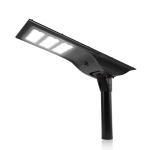
Flexible Installation with Split-Panel Design The split-panel design of modern solar street lights offers another layer of flexibility in installation. This innovative approach separates the solar panel from the LED fixture, allowing the solar panel to be placed in optimal sunlight while the light fixture illuminates the desired area. This design is especially advantageous in locations with obstructions, such as trees or buildings that may block sunlight during the day. When this becomes a priority, all in two solar street light can make a real difference to your results.
Conclusion In summary, advanced solar lighting solutions present an effective way for municipalities and property managers to enhance safety and efficiency in parking areas and public spaces. The combination of energy savings, low maintenance, and high-performance lighting makes these systems an attractive option. By adopting solar technology, cities can not only improve visibility and security but also contribute to sustainable development goals. Investing in these innovative lighting solutions is a forward-thinking approach to urban planning and public safety.
Furthermore, municipalities can customize lighting intensity based on specific needs. For instance, brighter lighting may be necessary in high-traffic areas, while lower intensity may suffice for less frequented pathways. This flexibility in illumination not only contributes to security but also makes energy consumption more efficient.
Understanding High-Performance Solar Street Lighting High-performance solar street lighting systems are designed to meet the diverse needs of urban and rural environments. These systems typically feature advanced light-emitting diode (LED) technology, which provides superior brightness while consuming less energy than traditional lighting solutions.
Furthermore, advancements in battery technology have improved nighttime performance, allowing solar lights to operate efficiently for hours after sunset. Some systems utilize smart sensors that adjust the brightness based on surrounding light levels, enhancing energy efficiency while maintaining safety. This adaptability is particularly important in urban environments where foot traffic varies significantly during the night.
Lastly, the durability of solar lights means they can withstand harsh weather conditions, ensuring reliable nighttime performance in various environments. This characteristic is essential for areas that experience heavy rain, snow, or extreme temperatures, allowing for consistent illumination without the risk of equipment failure.
High-Lumen Output: Ensuring Visibility and Safety When selecting solar lights for public areas, the luminance output is crucial. High-lumen solar lights ensure that streets and pathways are adequately illuminated, enhancing safety for pedestrians and motorists alike. For instance, a commercial solar street light with a high-lumen output can significantly reduce crime rates and accidents, making neighborhoods feel safer during nighttime hours.
graigmaness59elizabethmoore24003kkc@f.indexpulse.app16023