Bot Development and CAPTCHA Solving: A Practical Stack
Bot Development and CAPTCHA Solving: A Practical Stack
Privacy is a real concern when each challenge is sent to a third-party service. Because CapSkip runs locally, no challenge data leaves your machine, so sensitive projects stay on your own systems. For regulated data, this is often the clincher.
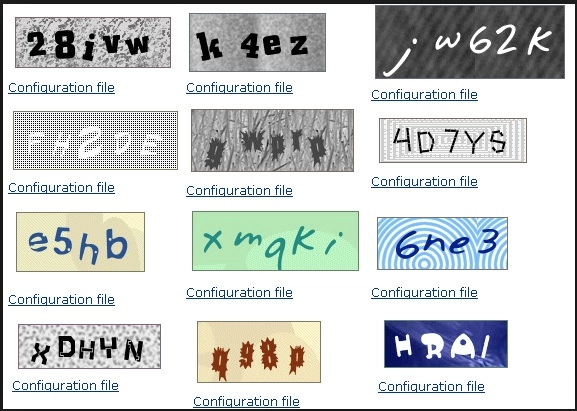
At its core, a CAPTCHA solver interprets a challenge and produces the answer a site is looking for, so an automated script can keep going. What sets CapSkip apart is the work stays on your own Windows machine - nothing leaves your hardware, and you avoid per-CAPTCHA charges. That combination of control and flat pricing is hard to beat for steady workloads.
Inventory tracking across many retailers means frequent hits, and plenty of such stores protect checkout with CAPTCHAs. Clearing the challenges on your hardware lets the data fresh and avoids runaway bills.
Cloudflare runs lightweight challenges which aim to separate people from bots and skip the usual puzzles. Getting past those dependably needs a dedicated solver, and CapSkip handles Turnstile on your machine.
Behind the scenes, reCAPTCHA v3 assigns a score based on watched signals rather than a single checkbox. Producing a good score calls for a solver designed for that approach, which is what CapSkip is built for.
QA teams run into CAPTCHAs too, especially when testing staging environments that copy production. Instead of disabling these tests, teams are able to have CapSkip handle the challenge so coverage remains complete.
Parallel solving becomes the point at which self-hosted tooling really pays off. Since there is no remote throttle tied to spend, teams can fan out jobs across numerous workers and keep keep costs flat.
CapSkip's extension puts solving right into Chrome, Firefox and Chromium browsers such as Brave and Edge. For manual work or light automation, the extension handles challenges and needs no any configuration.
Google reCAPTCHA v2 is among the most widespread challenges on the web, from the classic checkbox to invisible and callback variants. CapSkip handles each of these locally quickly, so your automation will not stall every time one appears. Because it emulates common solver APIs, hooking it up tends to be straightforward.
Handling parameters such as the reCAPTCHA data-s value correctly is often the difference between a successful solve and a rejected one. CapSkip produces the right values so submission goes through on the first try.
Proxies is often necessary for real automation, and CapSkip plays nicely with them out of the box. You can route traffic the way your setup needs while still solving CAPTCHAs locally, so the footprint natural across runs.
A frequent mistake is picking every solver as if the same. Line up the solver to the challenge types, your scale, and the cost ceiling - CapSkip covers the common types at a flat rate, which fits the majority of everyday workloads.
Selenium is a staple for browser automation, and CapSkip drops into it cleanly. Your your driver logic as is and delegate the CAPTCHA to CapSkip when one appears, so the session keeps going with no manual steps.
A Python codebase projects have a simple path with CapSkip, which mirrors the request format of major solving services. In practice, this means aiming existing code at CapSkip with little effort - no rewrite.
Teams migrating from 2Captcha usually expect a painful switch. In practice, because CapSkip mirrors the familiar API, the change comes down to mostly swapping the endpoint and keeping everything else as it was.
One of the biggest advantages of running locally comes down to price. Traditional services bill per solve, so your costs climb as volume grows. CapSkip uses flat-rate pricing and uncapped solves, so scaling does not mean watching the meter.
Those "prove you're human" checks are everywhere now, and they quietly block nearly any automated workflow in its tracks. The good news is that a dedicated solver handles them for you, and CapSkip does it locally.
CapSkip's API was built to mirror the endpoints of major CAPTCHA-solving services. What This guide means, tools and scripts that already target other services can switch to CapSkip with little more than a URL change and zero new code.
One of the biggest advantages of processing locally comes down to cost. Traditional services charge per solve, so your bill rise as volume increases. CapSkip goes with flat-rate pricing and unlimited solves, so you can scale does not mean worrying about the meter.
reCAPTCHA v3 takes a different tack: rather than a visible challenge, it scores interactions silently. Producing a good score requires a solver that handles the way v3 works, and CapSkip is built to handle it, returning results quickly so your pipeline continues.
A short migration checklist keeps the switch smooth: point the endpoint at CapSkip, confirm a few real solves, and then flip the main jobs. Because the API matches popular services, most of the work is already done.
reCAPTCHA tokens often catch out automations that solve ahead of time. The key is simply to grab the token close to the moment you use it, and CapSkip returns fresh results quickly enough to keep that easy.logansingletonlogan_singleton86@fe46.catche1.comYo5 6yz